01Start with the surface
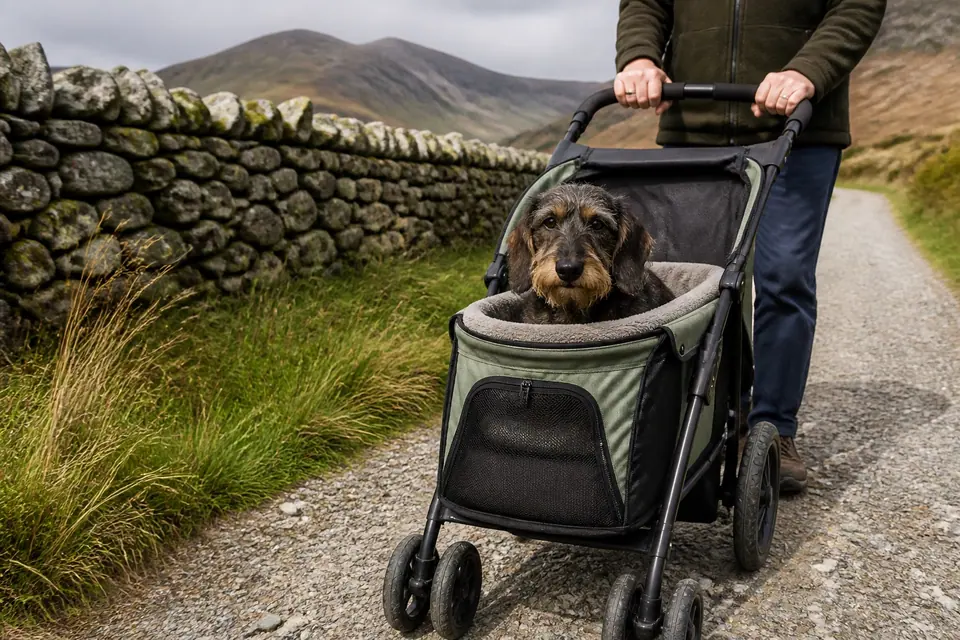
Firm, wide and well-drained paths are usually easier than loose stone, mud or grass. Larger wheels help, but they do not remove the effect of steep gradients or cross-slopes.
Recent weather can change an otherwise suitable route.02Measure the widest point
Use the widest part of the buggy, including wheels and fittings. Compare it with any gate, bridge or narrow-point measurements in the official route description.
Leave a sensible margin rather than relying on an exact fit.03Understand route grades
Miles Without Stiles grades describe walking surfaces and slopes; they are not a guarantee for every pet stroller. Read the whole route description and current notices.
‘For all’ is a stronger starting point than ‘for some’, but equipment and conditions still matter.Read the official grading guide ↗04Try shorter options first
A short riverside or lakeshore section lets you test handling and your dog’s comfort before committing to a full circuit. Plan a clear turnaround point.
The return can feel steeper and longer than the outward route.05Secure the passenger
Use the buggy as designed, with the dog settled safely and the brake applied whenever stationary. Carry a lead for stops and for sections where walking is easier.
Never rely on the buggy alone beside traffic, water or steep drops.06Keep a repair plan
Take a pump or suitable repair kit, water and a charged phone. Remote routes may have limited signal and no quick exit if a wheel or tyre fails.
Tell someone the route and expected return time for quieter outings.Find buggy help and hire →