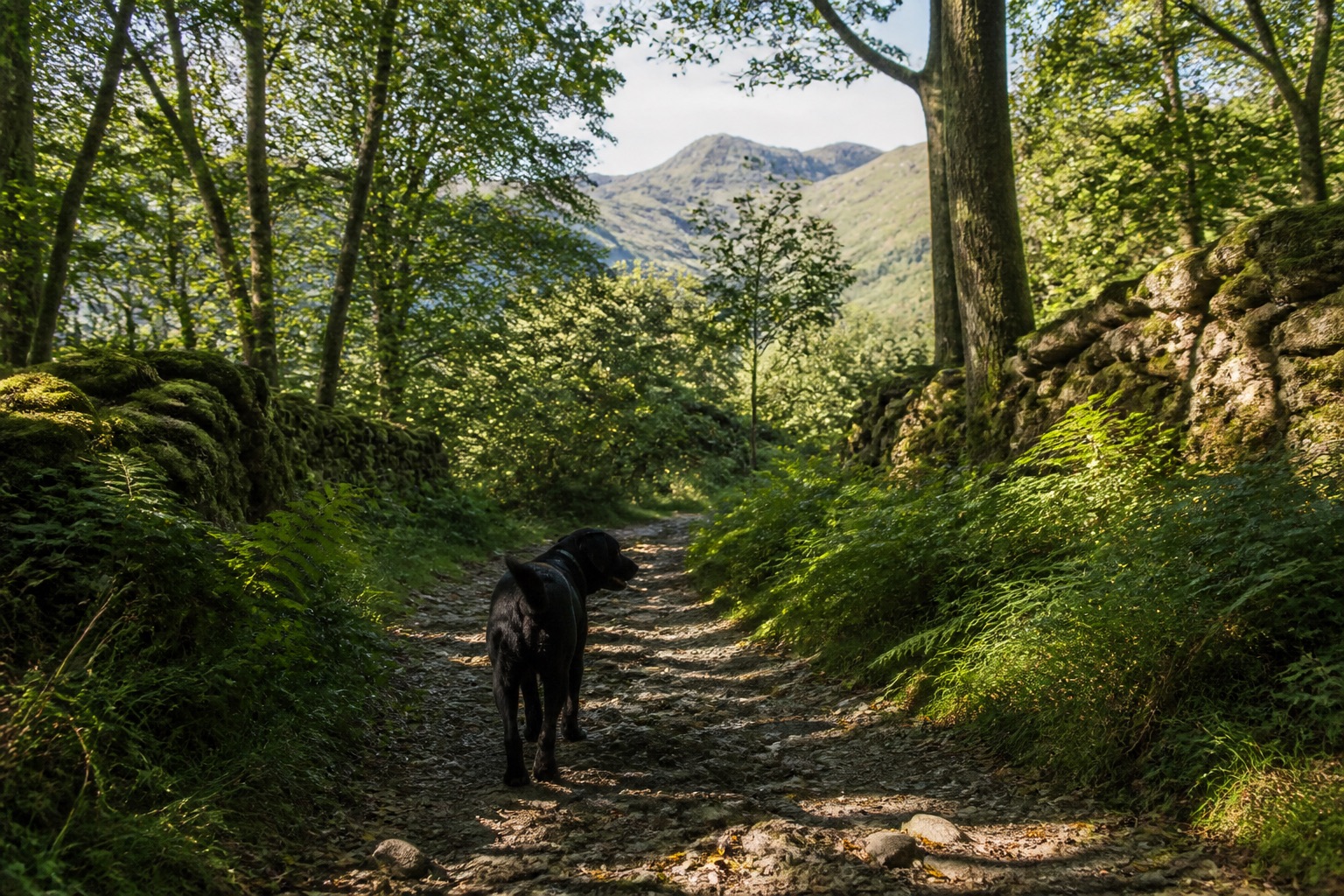
01Enjoy the fresher weather
Cooler air can make autumn one of the loveliest walking seasons. Carry water, give older or stiff dogs time to warm up and choose a route that suits the daylight, weather and ground conditions.
Lakeland weather can change quickly, so keep a shorter or lower-level alternative in mind.02Be easy to see
Reflective or light-up dog gear, bright clothing and a torch help everyone stay visible as mornings and evenings darken. Use a standard lead near roads and check that tag and microchip details are current.
A light should make a dog visible without dazzling other walkers, drivers or wildlife.03Look beneath the leaves
Fallen leaves are great fun to sniff through, but can hide glass, holes and uneven ground. Wet leaves, wooden bridges, stone steps and slopes can also become slippery.
Slow the pace where footing or visibility is poor and keep dogs close near water and steep edges.04Leave acorns, conkers and fungi alone
Do not use conkers or acorns as toys and prevent dogs eating unknown mushrooms, berries or plants. If something is swallowed, photograph it if safe and call your vet for advice.
Do not make your dog vomit unless a vet specifically tells you to.05Bring fresh drinking water
Use the water you carry rather than puddles, ponds or stagnant pools. Avoid water that looks discoloured, foamy or scummy and follow every local warning about blue-green algae.
Suspected antifreeze exposure needs immediate veterinary advice, even if a dog appears well.06End with a two-minute check
Check paws, ears, armpits and the neck for cuts, seeds and ticks, which can remain active in mild weather. Rinse and dry muddy paws before settling somewhere cosy.
As fireworks season approaches, an earlier walk and a calm home routine can help noise-sensitive dogs.